A New Home for Natural Building in Suffolk
For centuries, buildings were shaped by the places they belonged to — constructed from locally sourced materials, made by local hands, and adapted to climate, landscape and available skills. That connection between land, material and craft has largely been lost in modern construction. At Natural Building Systems, we believe it is time to rediscover that logic, using contemporary manufacturing, building science and digital tools to bring it back at scale. Today, we’re pleased to share an important next step in that journey: our plans to establish a new production facility in Suffolk in 2026.
This facility represents far more than additional manufacturing capacity. It is a cornerstone of our ambition to demonstrate a scalable model for low-carbon, bio-based construction in a way that delivers genuine environmental impact while strengthening regional economies.
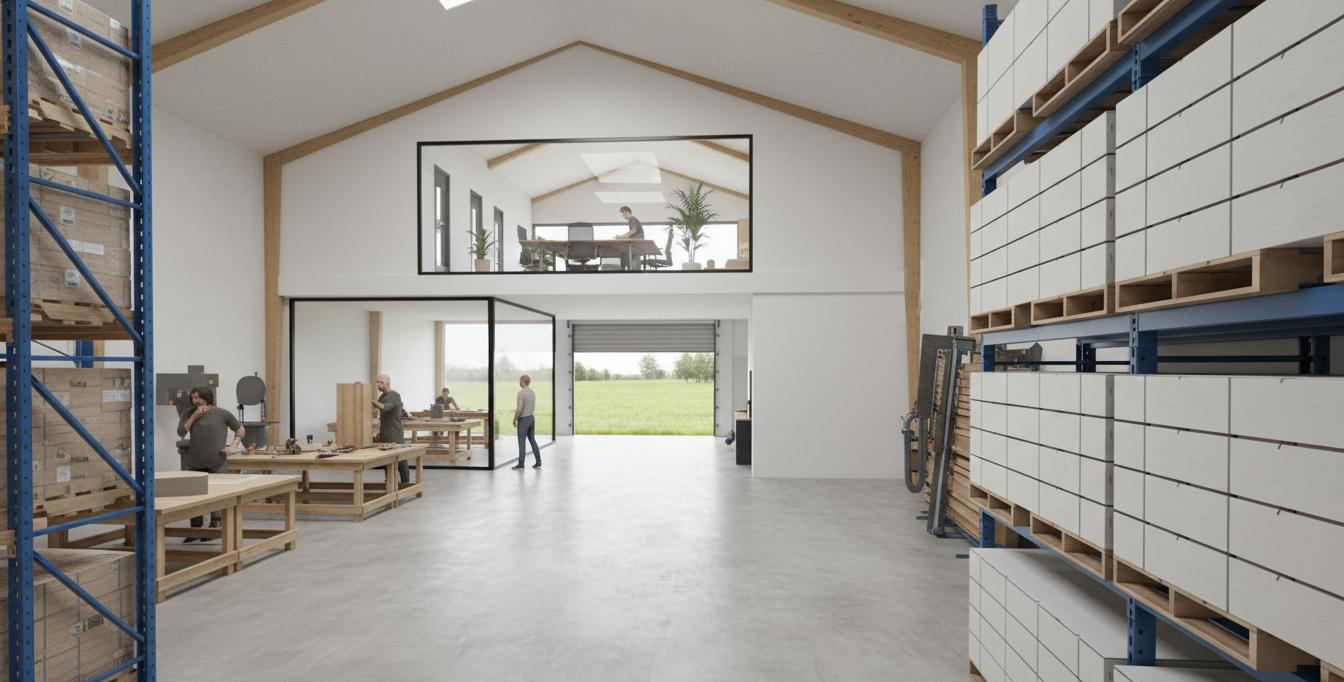
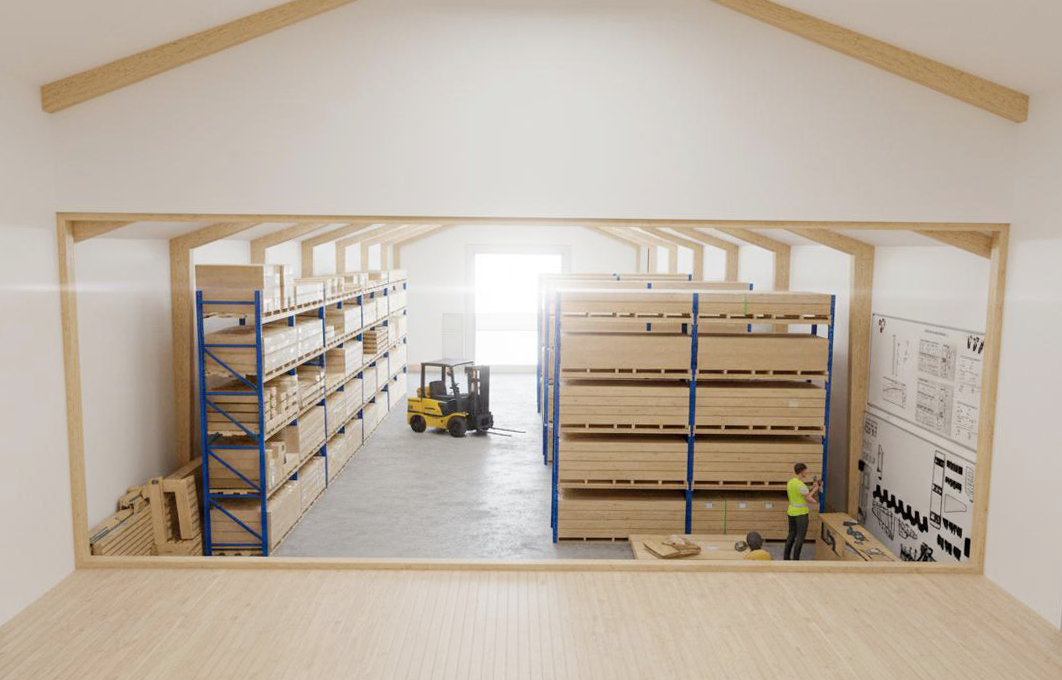
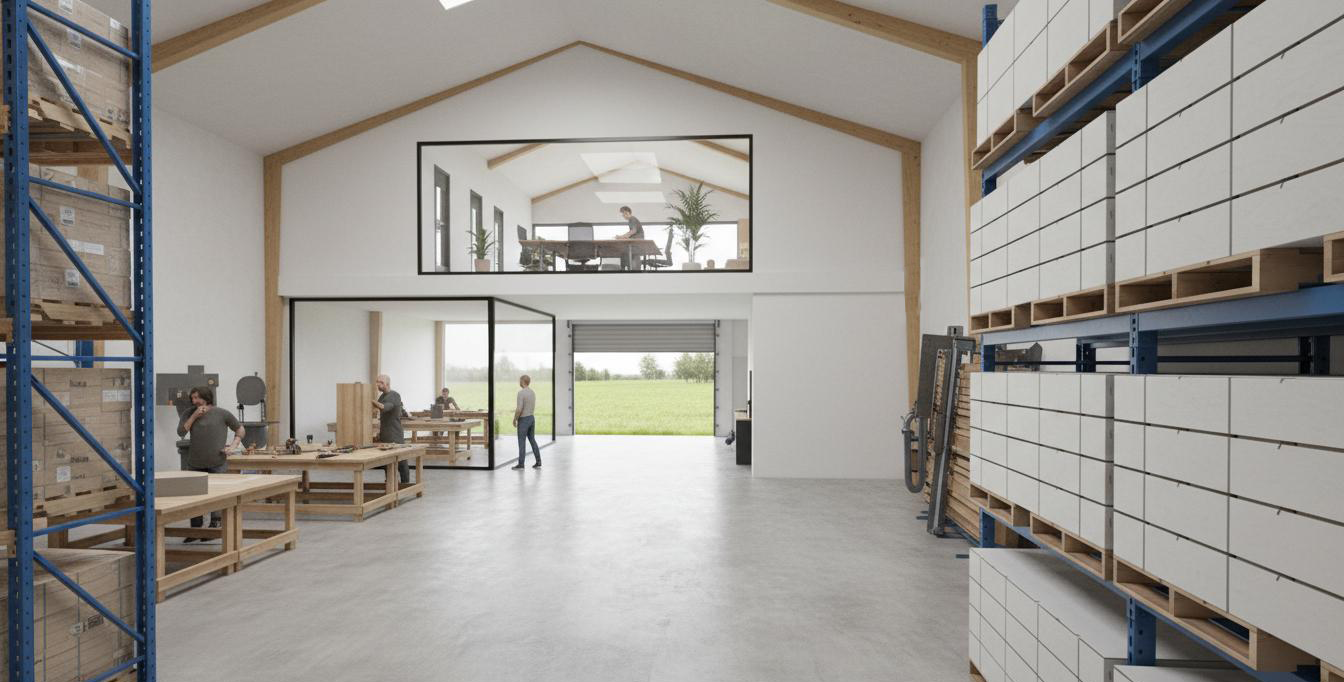
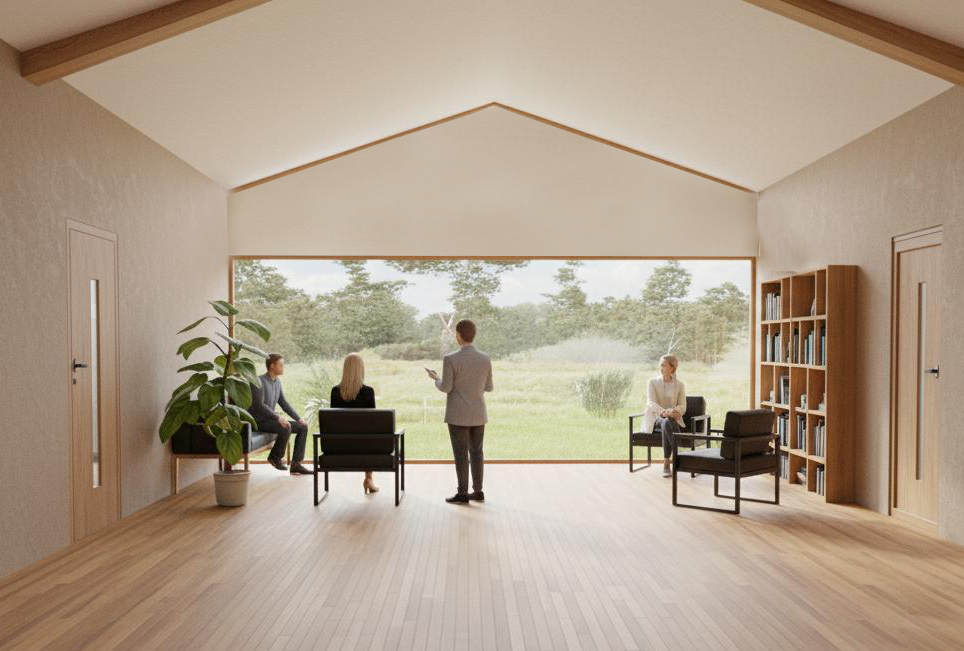
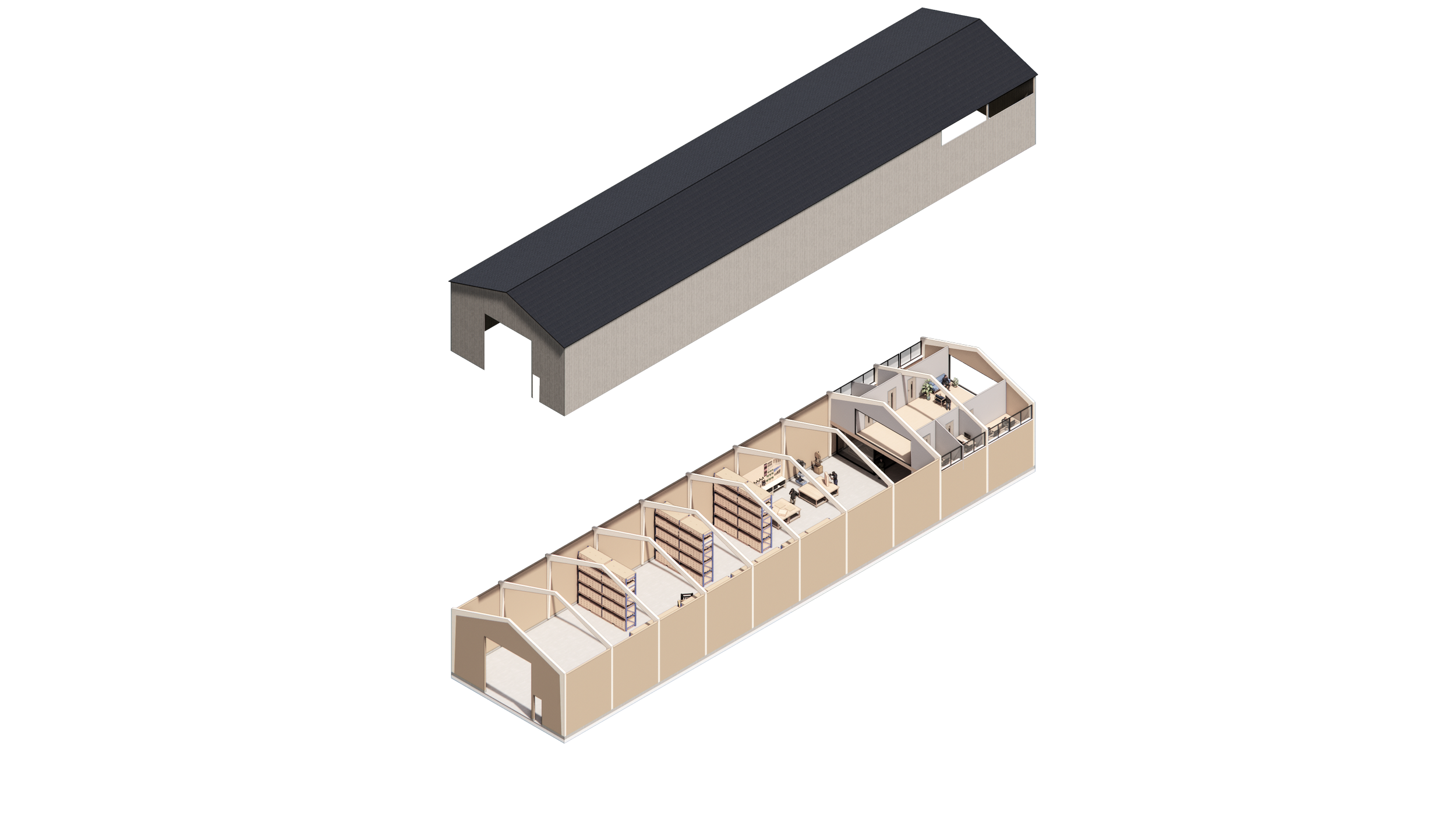
A render of the new production space due 2026
Building on what we’ve already proven
Over the past few years, we’ve focused on turning research, prototypes and pilot projects into real-world solutions. Through projects such as HAUS and our growing ADEPT® panelised construction platform, we’ve demonstrated that it is possible to combine the performance, quality and speed associated with modern methods of construction with the health, comfort and environmental benefits of natural materials.
The proposed Suffolk facility builds directly on that work. It is designed to support the next phase of development: moving from limited-scale production and demonstrators to a repeatable, investable model that can deliver homes and buildings at meaningful volume.
Why Suffolk?
Suffolk is already home to our pilot activity and an expanding network of collaborators across design, engineering, research and local government. It offers strong links to agricultural supply chains, access to skilled manufacturing labour, and proximity to partners working across housing delivery, innovation and sustainability.
Crucially, it is also a place where the benefits of this approach can be felt directly — through skilled jobs, new training opportunities, and the creation of long-term value that stays within the region.
What the facility will enable
Our ambition for the Suffolk facility is to create a flexible, scalable manufacturing hub capable of producing:
ADEPT® structural wall, floor and roof panels
ADEPT® internal partition systems for retrofit and commercial projects
Emerging material innovations currently in R&D, including low-carbon acoustic and insulation products
The facility will be designed around quality control, traceability and continuous improvement, with digital manufacturing processes and material passporting embedded from day one. This ensures not only performance and compliance, but also long-term adaptability and circularity.
At full operation, the model is intended to support the delivery of up to 100 homes per year, alongside non-residential and retrofit applications — with the flexibility to grow or be replicated in other regions over time.
A different model of growth
Importantly, this is not growth for growth’s sake.
Our vision is for a production facility that supports a more resilient construction and agricultural ecosystem: one that values collaboration over centralisation, and long-term impact over short-term extraction. We are actively exploring ownership and partnership models that include employees, communities and aligned investors, ensuring that success is shared and locally anchored.
This approach reflects our wider belief that the transition to low-carbon buildings must also be a transition to fairer, more inclusive economic models.
Looking ahead to 2026
Over the coming months, we will be progressing detailed feasibility work, engaging with potential partners and funders, and refining the technical and operational design of the facility. We see 2025 as a pivotal year — one in which the foundations laid through years of R&D, collaboration and pilot delivery can translate into lasting infrastructure for change.
This announcement marks the beginning of that next chapter.
If you’re a potential partner, investor, supplier, policymaker or collaborator interested in being part of this journey, we’d love to hear from you. Together, we can help make healthier, lower-impact buildings not the exception — but the norm.
Homes and buildings that are healthier for people and kinder to the planet.